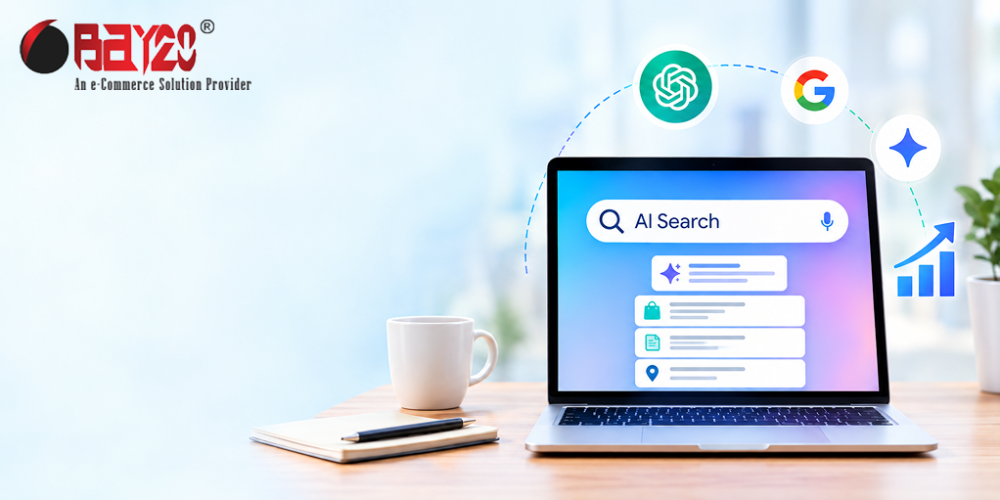
Think about how you looked for a product last week. There is a good chance you did not type three words into Google. You asked a question — maybe a long one — and an AI tool gave you a short answer with a few recommendations. Your customers are doing the same thing.
This changes two things for every business: how you get found for free and where you can pay to be seen. Here is a simple plan that covers both.
What has changed
- Google now shows an AI-written summary above many results, and its AI Mode answers in full conversation form.
- ChatGPT, Gemini, and Perplexity search the web themselves and recommend specific businesses and products by name.
- ChatGPT has started showing ads. They began in the United States earlier this year and, from late August, are live across Europe, including Germany, France, Italy, Spain and the Netherlands. They appear below the answer, clearly marked, and only for users on free plans.
In short, AI is now both a search engine and an advertising platform. Being ready means working on both sides.
Part 1 — Get found for free
- Fix the basics. Fast, mobile-friendly, crawlable pages with content in the HTML. AI tools skip sites they cannot read.
- Write like you are answering a question. Clear headings, short paragraphs, one direct answer per section. This is the heart of answer engine optimization.
- Keep product information complete. Price, availability, specifications, delivery and returns — all on the page, all marked up with schema. AI tools recommend products they can describe with confidence.
- Build trust signals. Reviews, a full Google Business Profile, an up-to-date About page, and mentions on respected sites all help AI tools decide you are a safe recommendation.
Part 2 — Pay to be seen, carefully
ChatGPT Ads are new, so treat them as a test rather than a core channel. A sensible first step looks like this:
- Keep Google and Meta running as normal. Your Google Ads and Meta campaigns remain the proven performers and act as your benchmark.
- Set a small, separate budget. Enough to learn from, small enough that a poor result does not hurt.
- Set up tracking before you spend. OpenAI provides a pixel and conversions API. Connect them, then compare results in one dashboard — our guide to building a GA4 ecommerce dashboard in Looker Studio shows how.
- Measure conversions, not clicks. People using AI tools are in decision mode. Judge the channel on sales and leads, exactly as you would in any PPC management review.
- Note the access model. In Europe, ChatGPT Ads are currently booked through OpenAI’s ads team and partner agencies; self-service is expected to follow.
Do these in order
Part 1 comes first. Paid ads can put you in front of an AI user, but if that user then asks the AI a follow-up question about you and gets nothing, you have paid for a lost customer. Organic readiness makes every paid click work harder.
Bay20 helps ecommerce brands across Europe with both sides — SEO, AEO and GEO on one hand, and multi-channel paid campaigns as a Google Ads agency with certified experts on the other. For stores on Shopware or other e-commerce platforms selling into Germany and the DACH region, this is a good quarter to start.
Contact us at wargis@bay20.com / manish@bay20.com or call us at +91-9582784309 or +91-8800519180 for any support related to Digital marketing/SEO.